


A live game show, not a pokie and not a fish shooter
Live game shows are the television-style corner of a live casino. Instead of a dealer and a deck there is a presenter, a purpose-built set and a physical device that decides the round: a wheel, a ball machine, a dice tower. Ice Fishing belongs to the wheel family. The theme is a frozen lake and a fishing cabin, and the showpiece is a bonus stage where the catch determines the multiplier.
Three points separate it from everything else with fish in the name. It is streamed from a studio in real time, so there is one shared round for everyone at the table and it runs on the studio's schedule, not at the press of your spin button. There is no skill element; nothing you do after betting changes the result. And it is a casino game with a house edge on every bet spot, however much it looks like a quiz show.
We are not going to quote its return percentage, multipliers or top prize here. Those figures are set by the studio, can differ between versions and are shown inside the game. Any page that prints them without telling you to check the rules panel is asking for trust it has not earned.
How a round runs, start to finish
Wheel-based game shows follow a common sequence, and Ice Fishing keeps to it. If you have watched one round of any money-wheel show, the structure will be familiar.
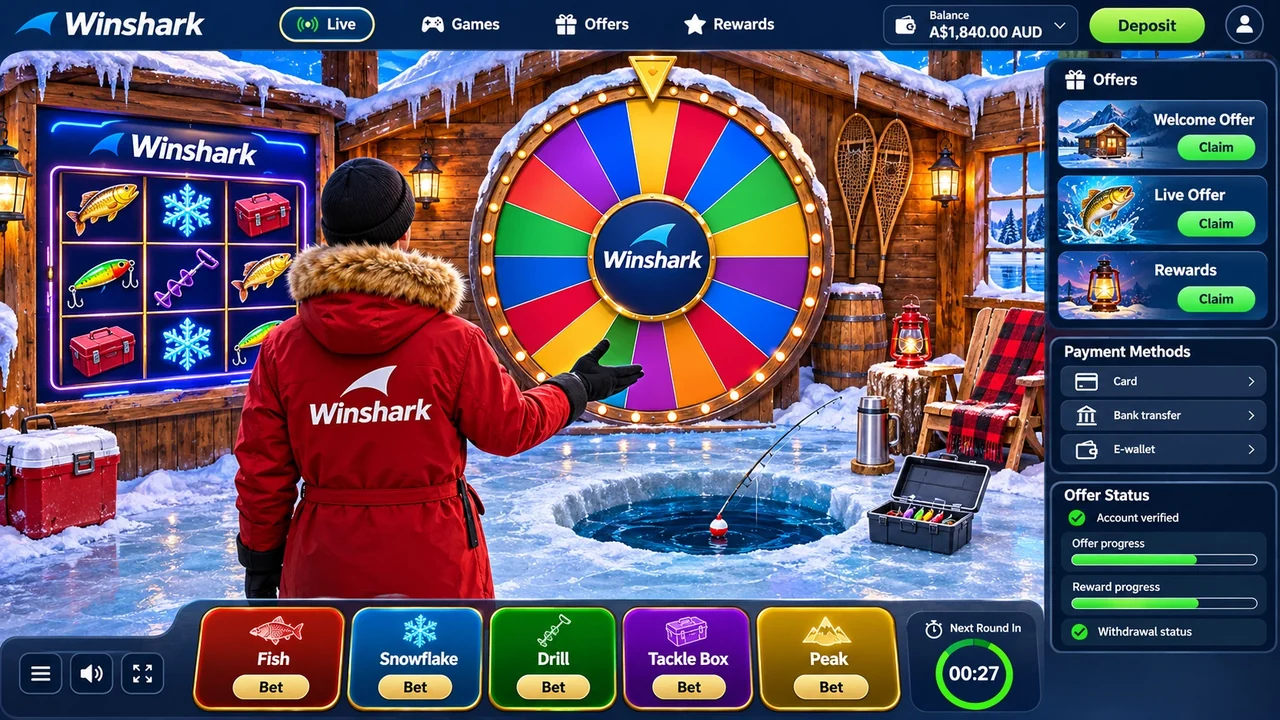
- Betting opens. A countdown appears. The bet spots along the bottom of the screen correspond to the segment types on the wheel: ordinary paying segments and one or more bonus segments.
- You place chips on as many spots as you like. A bet on a spot wins only if the wheel stops on a matching segment.
- Betting closes and the host spins the wheel. Before or during the spin, games of this type commonly add a random multiplier or upgrade to one or more segments for that round.
- The wheel stops. If it lands on an ordinary segment, bets on that spot are paid at the stated odds and all other bets lose.
- If it lands on a bonus segment, the show moves to the bonus stage. In Ice Fishing this is the fishing sequence: a catch is hauled up through the ice, and what comes out decides the multiplier applied to the bets of players who backed that bonus.
- Settlement. Winnings are credited and the next betting window opens.
The crucial rule sits in step five. On nearly every game show, you share in a bonus round only if you had a chip on that bonus spot when betting closed. Everyone else watches. The help panel states it in one line, and it is the single most common cause of disappointment for new players.
Bet spots and bonus rounds: what to read in the paytable
Open the help or rules panel, usually a question mark or an 'i' in a corner of the stream, before your first chip. For Ice Fishing, as for any show of its kind, five things are worth finding.
- Each bet spot and its payout. Ordinary segments pay fixed odds. Note how many segments of each type are on the wheel, because that is the probability.
- The return figure for each spot. Studios publish a theoretical return per bet. Spots on the same wheel are often priced differently, and bonus spots can sit at either end of the range.
- How each bonus round works. Whether there are several bonus types or tiers, what decides the multiplier, and whether the outcome involves a choice or is entirely random.
- The maximum payout. Game shows cap the total a single round can pay. Large multipliers are subject to it.
- The malfunction and disconnection rules. What happens if the stream fails, the wheel is spun incorrectly or you lose connection mid-bonus.
If you are unsure how to read these panels, our guide on how to read game rules goes through the standard layout, and the glossary covers terms such as return to player, multiplier and volatility.
What 'ice fishing casino' is often confused with
Search results for the phrase mix several unrelated products. A quick way to tell them apart:
| Product | How the result is decided | Pace | Where it sits in a lobby | Can you play free |
|---|---|---|---|---|
| Ice Fishing live game show | Physical wheel and live bonus stage in a studio | One shared round at studio pace | Live casino, under game shows | No, but you can watch |
| Fishing-themed pokies | Random number generator | As fast as you spin | Pokies or slots | Often, in demo mode |
| Fish shooting or fish table games | Random number generator behind an arcade-style screen | Continuous; you fire shots that each cost a stake | Arcade, fishing or instant games | Sometimes |
| Fishing-themed crash or instant games | RNG or provably fair seed | Seconds per round | Instant or original games | Sometimes |
Fish shooters cause the most confusion because they look like a video game: you aim at fish and each one caught pays a prize. Underneath, every shot is a bet with a random outcome, and aim matters far less than it appears. They are a legitimate category, but they are not what the live show is. If a site's 'Ice Fishing' tile opens a pokie with reels, it is a different title that happens to share the theme.
Finding the game in a casino lobby
Not every casino carries every live studio's shows, so the first job is confirming the game is there before you register or deposit.
- Open the live casino section and look for a 'game shows' tab or filter.
- Use the lobby search and type the game's name. Check that the tile opens a live stream with a host, not a pokie.
- Look at the supplier name on the tile or in the game information. The live show comes from one studio; copies with similar names from other suppliers are different games.
- Check the table limits on the tile and the currency they are quoted in.
- Open the stream and watch a few rounds without betting. Most lobbies allow it once you are logged in.
Two things can stop you at this stage. Live suppliers restrict their games by country, so a show may be listed in the lobby and still refuse to load from an Australian connection. And some crypto-first casinos carry only their in-house games plus a partial live catalogue. Neither is a fault you can fix; do not reach for a workaround. Our overview of live casino research explains how to check what a site really carries, and the games guide covers the other categories.
The cost of an hour: a framework, with a labelled example
You can estimate what any game show costs to play with three inputs: your total stake per round, the number of rounds per hour and the house edge on the spots you bet. The first you control. The second you can count by watching for ten minutes. The third is one hundred per cent minus the return figure in the rules panel.
Here is the arithmetic with placeholder numbers. They are assumptions chosen to show the method and are not the figures for Ice Fishing. Suppose you place A$2 in total each round, the show runs 50 rounds an hour and the spots you choose have a 4 per cent edge. Turnover is A$100 an hour and the expected cost is A$4. Change one input: spread A$5 a round across more spots and the same hour costs A$10. Choose spots with a steeper edge and it rises again.
Then replace the placeholders with the real ones from the game. The exercise takes a couple of minutes and tells you more than any review. Bear in mind what an expected cost is: a long-run average. An hour of a volatile game show will rarely land on it. Most hours finish worse than average, and a few finish far better, which is how the average comes out where it does. Bankroll basics shows how to turn that into a stake you can sustain.
Why bonus-chasing drains a balance
The bonus round is the reason people open the game, so the tempting plan is to bet only on the bonus spots and wait. The wheel's layout explains why that is hard on a bankroll. Bonus segments are a small minority of the wheel. Most spins land elsewhere, and on each of those spins a bonus-only bettor loses the full stake. The return on a bonus spot is concentrated in rare, large results.
That is the definition of high volatility. The long-run return might be perfectly reasonable, and you can still run through a session's budget without seeing the fishing stage once. Covering the ordinary segments as well smooths the ride and raises your total stake per round, so the hourly cost goes up. There is no arrangement of chips that beats the edge; there are only different shapes of risk at roughly the same price. Decide beforehand which shape you want and how many rounds your budget buys at that stake.
Clips of enormous multipliers circulate widely and are real. They are also the top fraction of a per cent of rounds, selected for sharing. Treat them as you would a photo of a lottery winner.
Bonuses and live game shows
If you intend to play Ice Fishing with a deposit bonus active, read the bonus terms for live games first. Three arrangements are common. Live casino, game shows included, is excluded from bonus play entirely. Or it is allowed and counts at a reduced rate, so each dollar staked clears only a fraction of a dollar of wagering. Or game shows are treated differently from live tables, sometimes more generously, sometimes less.
A reduced contribution rate multiplies the turnover you owe. A requirement that looks manageable on pokies can become several times larger on a game show, and you will not be warned at the table. Some casinos run dedicated live casino promotions, such as cashback on live losses, which fit this kind of game better than a pokies-oriented welcome bonus. The clauses to look for are in wagering requirements and bonus terms, and loss-based offers are covered in the cashback guide. If the terms are unclear, playing without a bonus keeps every win withdrawable.
Playing a live show from a crypto balance
At a crypto casino your balance may be held in bitcoin, ether or a stablecoin, while the live studio runs its tables in a conventional currency. The casino converts on the way in and on the way out of each round, at its own rate. Table limits shown in the lobby are therefore approximations in your coin, and the value of your balance in dollars moves with the market while you play. A stablecoin balance removes the second effect. The AUD guide and the stablecoin guide explain both layers.
One more distinction matters on a site known for dice. In-house dice and crash games are usually provably fair: each result can be verified against a cryptographic seed. A live game show cannot be checked that way, because the result comes from a physical wheel on camera. Its integrity rests on the studio's procedures, its testing and its licence. Neither model is automatically better, but they are different kinds of assurance, as set out in fairness research. If verifiable randomness is what you value, the dice game guide describes the format built around it.
Stream, phone and Australian hours
A game show is a continuous video stream with a betting deadline. On a slow or unstable connection the picture can fall a few seconds behind the studio, and a bet placed on the last tick of your countdown may arrive after the real window has shut. Bet early in the window, and prefer home wi-fi to mobile data for longer sessions; an hour of live video uses data like any other stream.
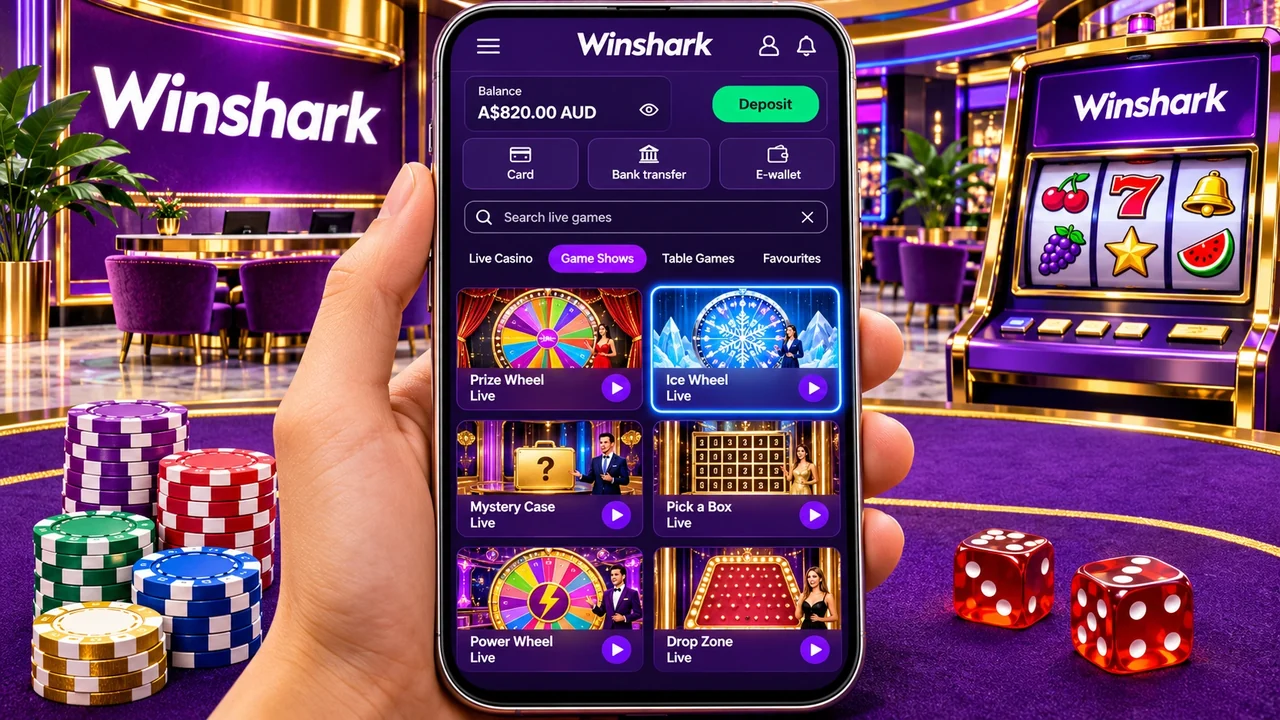
On a phone the layout turns to portrait, with the stream above and the bet spots below. Everything works, but small screens make it easy to tap the wrong spot or double a stake by accident, so check the total bet figure before the timer ends. If you drop out during a round, accepted bets stand and are settled without you; the result will be in your game history when you reconnect. Notes on phone play in general are in the mobile guide.
Game shows run around the clock with rotating hosts, so the game is available on an Australian evening even though the studio is on the other side of the world. Scheduled maintenance breaks do occur and are announced on the tile.
Seven checks before the first chip
- The tile opens a hosted live stream, and the supplier name matches the studio behind the show.
- You have read the payout and the return figure for every spot you plan to bet.
- You know whether a bonus round pays only those who backed it.
- You have found the maximum payout per round and the disconnection rule.
- You have counted rounds over ten minutes and worked out an hourly cost at your stake.
- Any active bonus allows game shows, and you know the contribution rate.
- Your session budget is fixed in dollars, whatever coin the balance is held in.
None of this takes longer than watching a handful of rounds, which you should do anyway. A game show rewards patience before betting far more than cleverness during it. If the list throws up a question the rules panel does not answer, ask support in writing and keep the reply; the customer support page suggests how to phrase it.
Where this sits under Australian law
Live casino games, game shows included, cannot be lawfully offered online to people in Australia under the Interactive Gambling Act 2001. No Australian licence covers them. The Act is aimed at providers and advertisers rather than individual players, and the Australian Communications and Media Authority has non-compliant sites blocked by internet providers. Any casino where an Australian can open Ice Fishing is therefore an offshore one.
The practical consequence is about recourse. If a round is settled wrongly or a payout is delayed, the dispute runs through the operator and whichever offshore authority licensed it, not through an Australian body. Keep the round ID from your game history, the time and a screenshot if something looks wrong; the studio can review footage only against that ID. More detail is in our page on Australian law and the security checklist. For adults only: 18+, and only with money set aside for entertainment.
Ice Fishing live game: common questions
Is Ice Fishing a game of skill?
No. Once betting closes, the wheel and the bonus stage decide everything. The only decisions you make are which spots to bet on and how much, and those change the volatility of your session, not the house edge.
Can I play Ice Fishing for free?
There is no demo version, because the game is a live broadcast with a host and studio. Most casinos let logged-in users open the stream and watch rounds without betting, which is the sensible way to learn the flow and read the rules panel.
What is the RTP of Ice Fishing?
The studio publishes a theoretical return for each bet spot inside the game's help panel, and that is where to read it. Figures quoted on third-party sites may refer to a different version or a single spot, so we do not reproduce them.
Do I win the bonus round if I did not bet on it?
On wheel-based game shows the standard rule is no: only players with a chip on the bonus spot that triggered take part in that bonus. Confirm the wording in the rules panel, since it is the rule most often misunderstood.
Why can't I find Ice Fishing at my casino?
Either the casino has no agreement with the studio that makes it, or the studio restricts the game in your country. In both cases the tile will be missing or will fail to load. A similarly named pokie or arcade game is not a substitute; it is a different product.
Is it the same as a fish table game?
No. Fish table or fish shooting games are arcade-style RNG titles where each shot is a bet. Ice Fishing is a hosted live show built around a wheel, with one shared result per round for everyone watching.